
Thrace
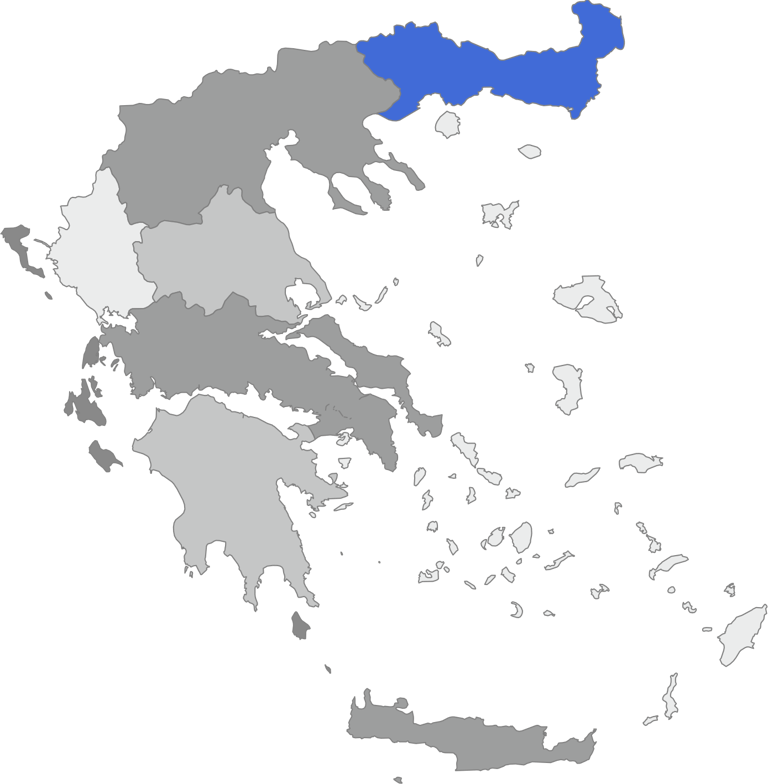
Location
The three parts of Thrace present different musical and dance trends, influenced by various timbres. In the area near Constantinople and on the coast of the Propontis, the music is influenced by the Byzantine chant tradition and urban singing, with a strong sense of nostalgia for the "lost capital". Further north, influences from the Black Sea are observed, while in Western Thrace and Eastern Rumelia the tradition is shaped by South Slavic and Macedonian influences. In the areas around the Red River—Didymoteicho, Soufli and Orestiada—where the Marids, an ancient Thracian tribe, live, the musical and dance tradition presents special characteristics, different from the rest of Thrace. Consequently, Thracian dances cannot be examined as a single cultural entity.
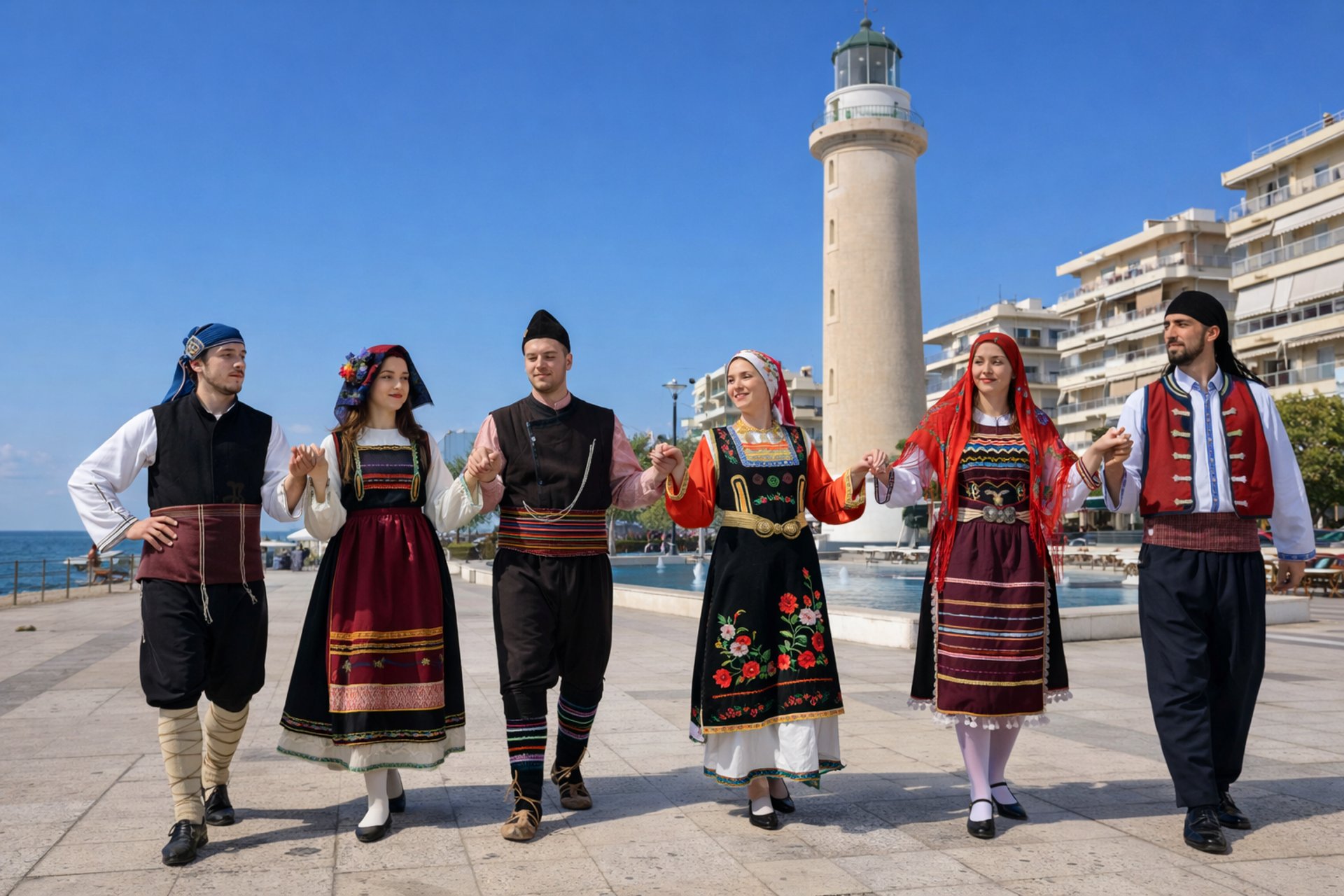
The distinctive style of Thrace, the particular melodies and movements of the dances give the region a uniqueness, very different from the rest of Greece. Traditional Thracian dances are usually fast and circular, with men dancing first in line.
Most dances have an open circle, with the first dancer leading the dance. In the past, the first dancer was always a man and had to be capable in order to lead the dance correctly. Skill and faithful rendering of the style distinguished good dancers. The dances are often mixed, with men and women dancing either mixed (mainly in Northern Thrace), or first the men and then the women (mainly in Western and Eastern Thrace).
There are also paired dances and dances performed by individuals. In paired dances, a man dances with a woman or only men or only women, they move without holding each other, but always in interaction with each other.
Info
Dances
Explore traditional Greek dances
Follow us
to always be informed.
subscribe
© 2025. All rights reserved.
Created by


Menu