
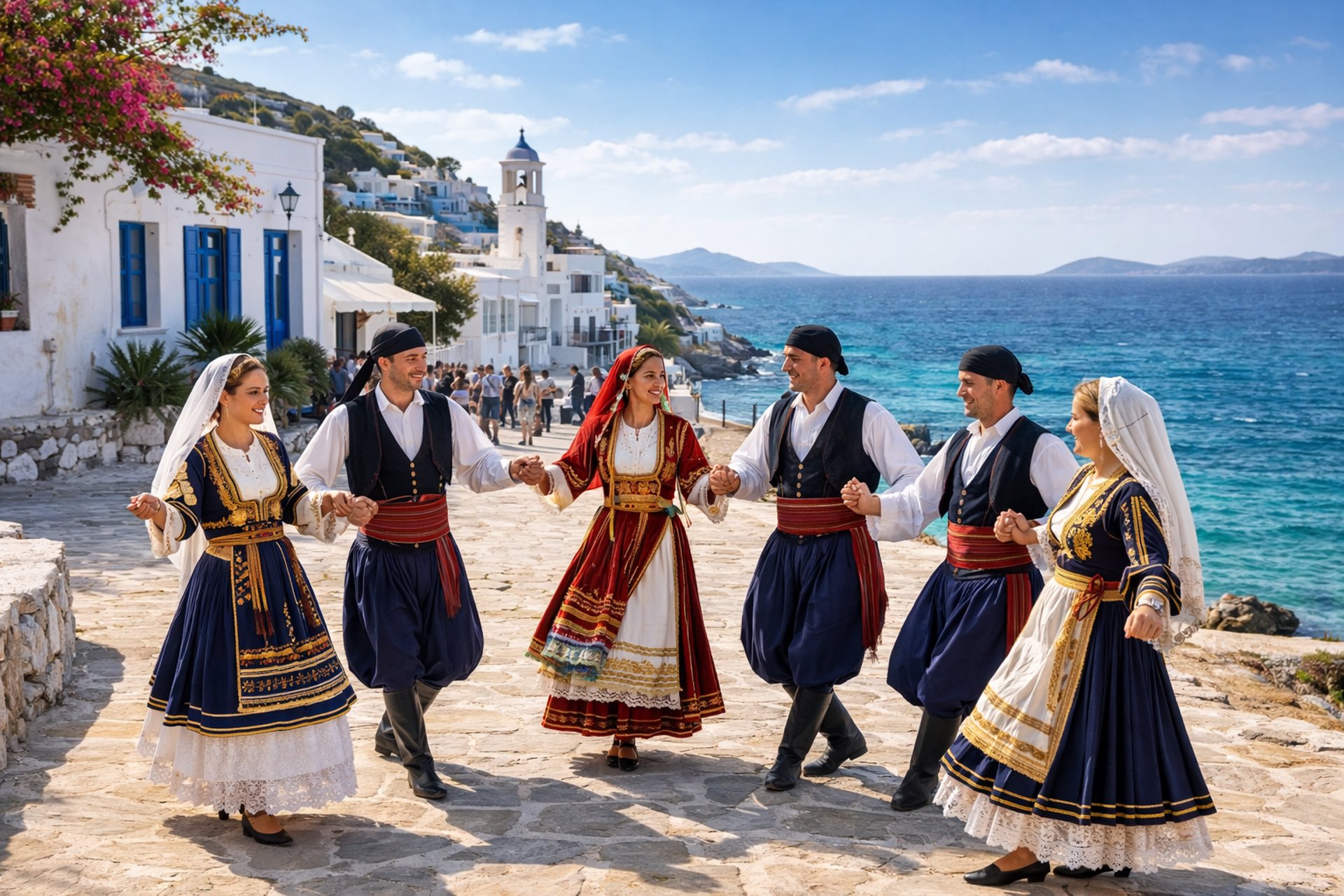
Aegean Islands
Location
In general, two main cultural regions can be distinguished in the Aegean Sea. The first includes the islands of the Thracian Sea and the Eastern Aegean, where influences from the East are strong. The second concerns the Dodecanese and the Cyclades, which in many cases show influences from the West. However, there are also two groups of islands that differ from the rest. The Northern Sporades have retained their character due to their isolation, while the islands of the Argosaronic Gulf have been more influenced by mainland Greece.
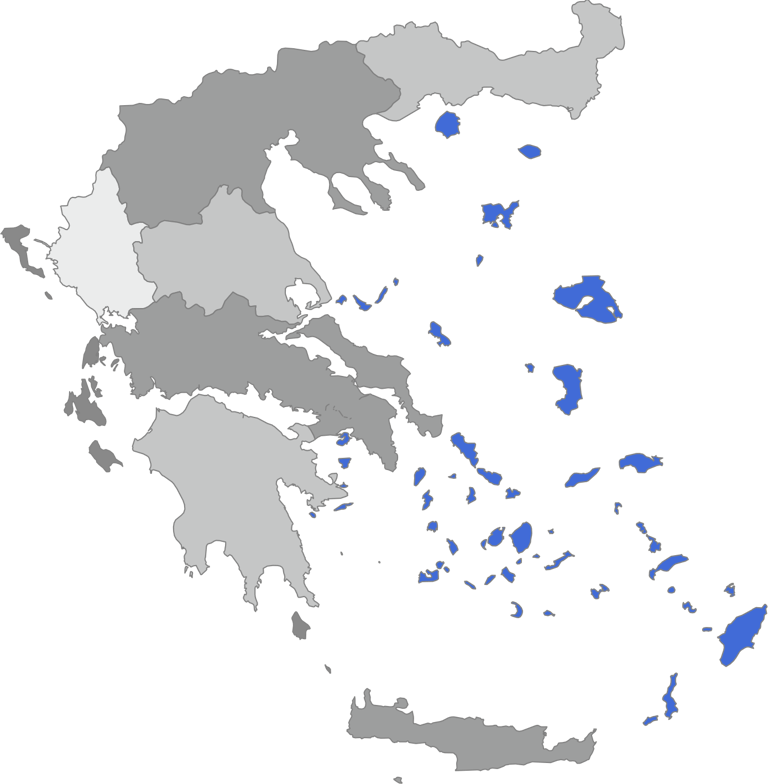
Aegean dances are mainly group dances and are usually danced in an open or closed circle. However, there are also dances that are danced in pairs, either facing each other, such as karsilamades and zeibekiko, or embracing each other, such as baloi. The most common rhythms are bisymoi, which are lively and fast, and enniasimoi, which are performed more slowly and heavily.
The main characteristics of Aegean island dances are the light body movement, the bending of the knees, the low jumps of the lead dancers and the great variety in the way of expression. These elements differ from the dances of mainland Greece, which are heavier, with strong steps, firm support on the whole foot and slower rhythms.
Nevertheless, each island – and often each village – has its own style of dances. For example, the sousta of Karpathos is heavier and stricter, that of Rhodes is lighter and more bouncy, while that of Symi is calmer and more accessible.
Info
Dances
Explore traditional Greek dances
Follow us
to always be informed.
subscribe
© 2025. All rights reserved.
Created by


Menu