
Regions
Explore traditional Greek dances from various regions on the map
Regions
Explore traditional Greek dances per region.
Asia Minor
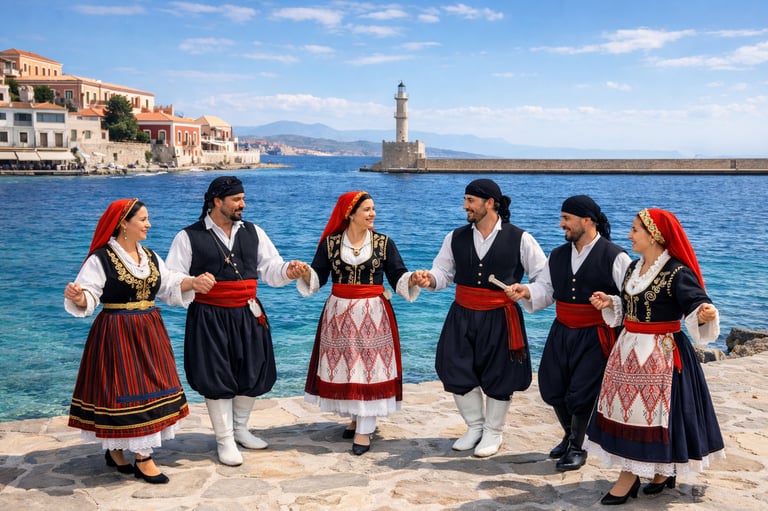
Crete
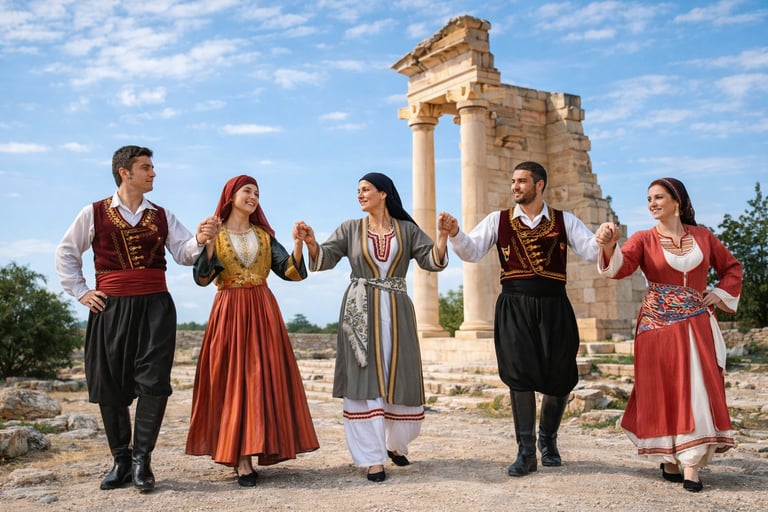
Cyprus
Epirus
Ionian Islands
Macedonia
Peloponnese
Pontos
Central Greece
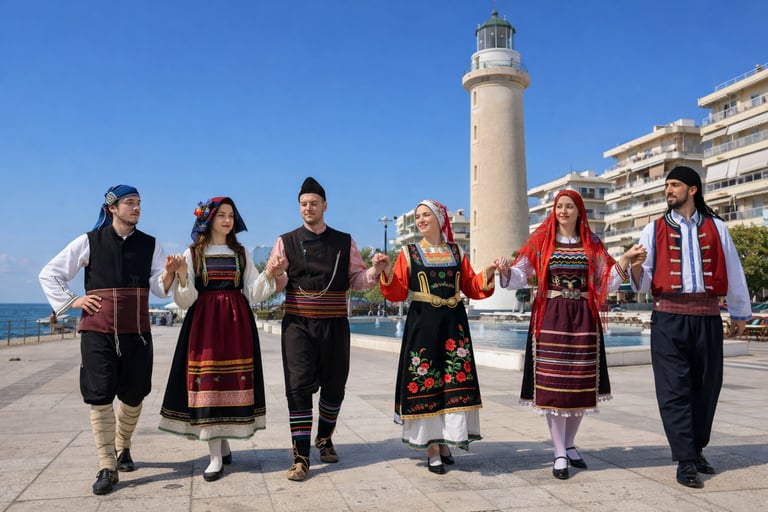
Thessaly
Thrace
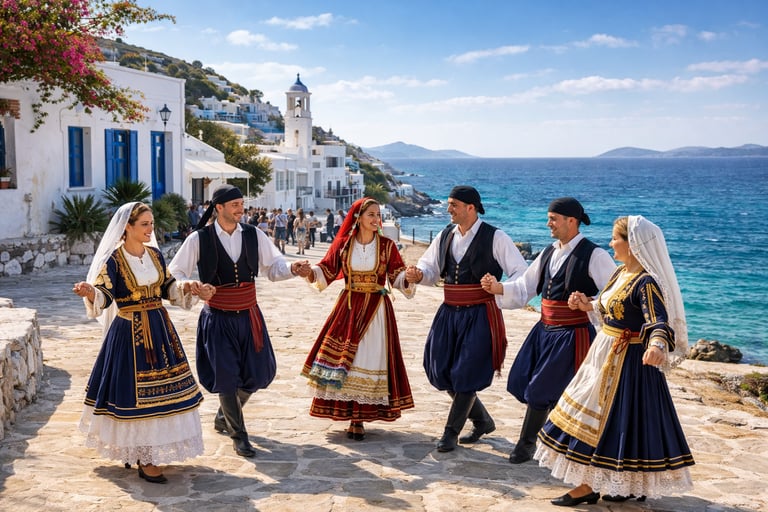
Aegean Islands
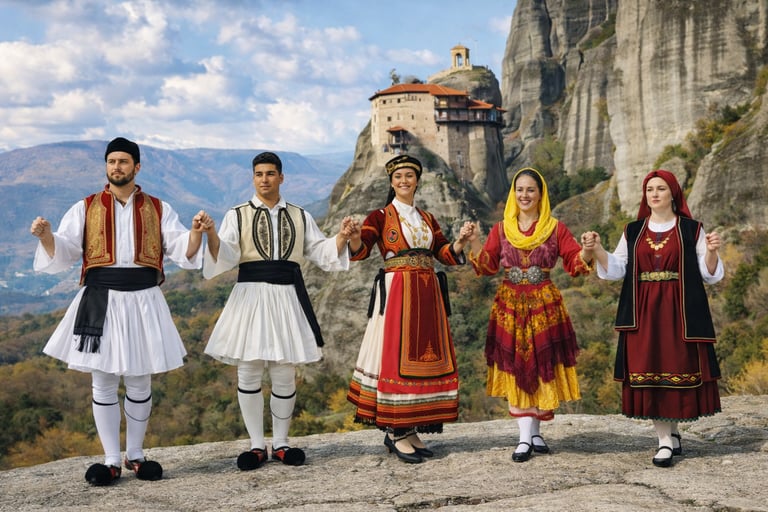
In general, two main cultural regions can be distinguished in the Aegean Sea. The first includes the islands of the Thracian Sea and the Eastern Aegean, where influences from the East are strong.
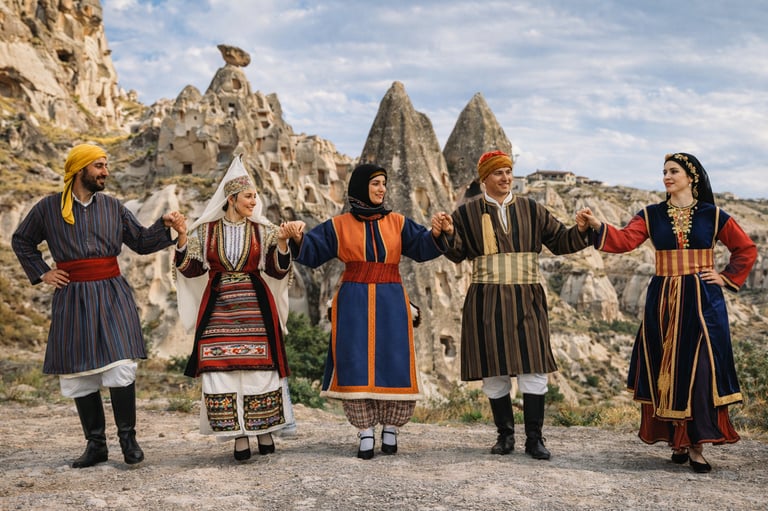
The term Asia Minor refers to the peninsula that extends west of the Asian continent, along an imaginary line from the Gulf of Alexandretta (Issos) to Trebizond in the Black Sea.
In the rich dance tradition of Crete, we find approximately twenty-four traditional dances. Until a few years ago, most of them were little known and considered "forgotten".
Cypriots feel a strong sense of pride in their cultural heritage, which has a history that exceeds 9,000 years. With such a long history and a strong multicultural identity, this is entirely to be expected.
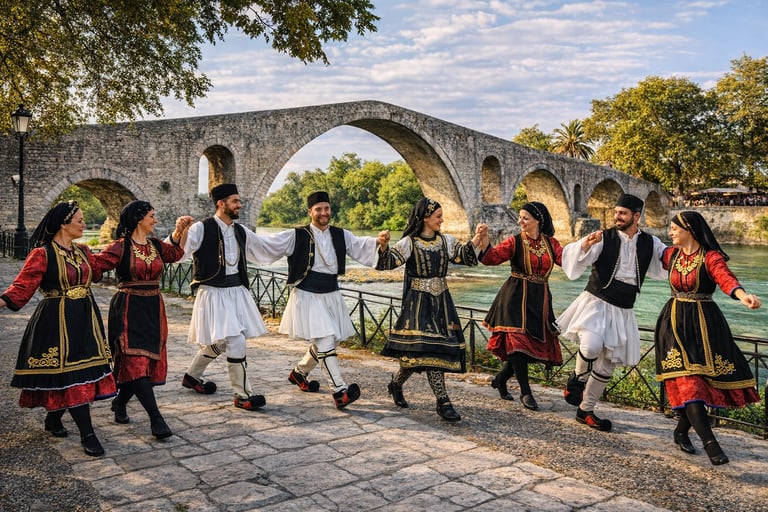
Epirus is an extensive historical and geographical region of Western Greece and is the most mountainous, as most of it is covered by the Pindos mountain range.
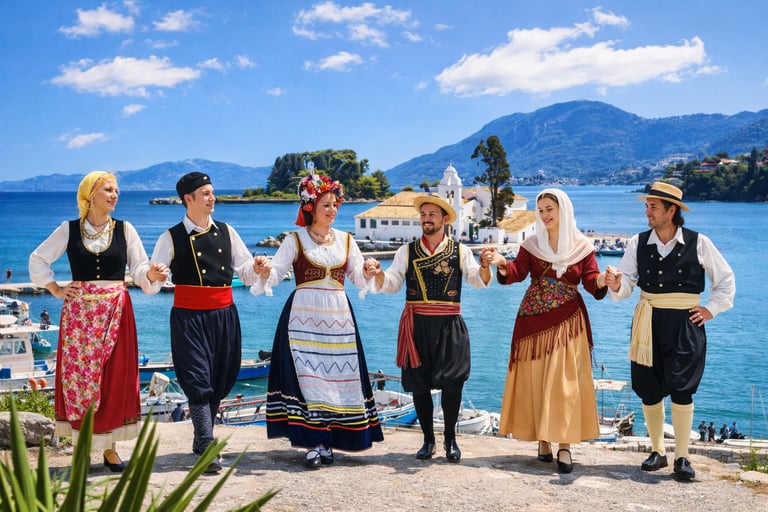
The culture of the Ionian Islands, influenced by conquerors with a higher cultural level compared to the Turks who dominated the rest of Greece, was never interrupted.
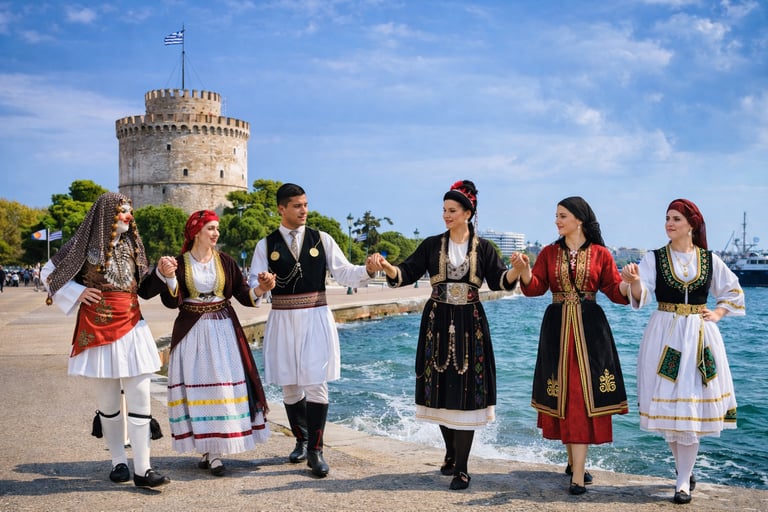
In Western Macedonia, two main categories can be distinguished based on melodies, rhythms and dances. The first concerns the mountainous areas to the south and west of Mount Olympus.
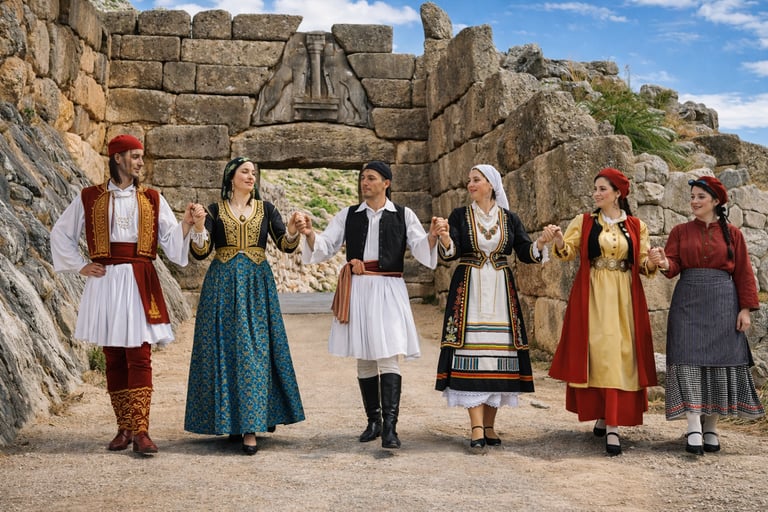
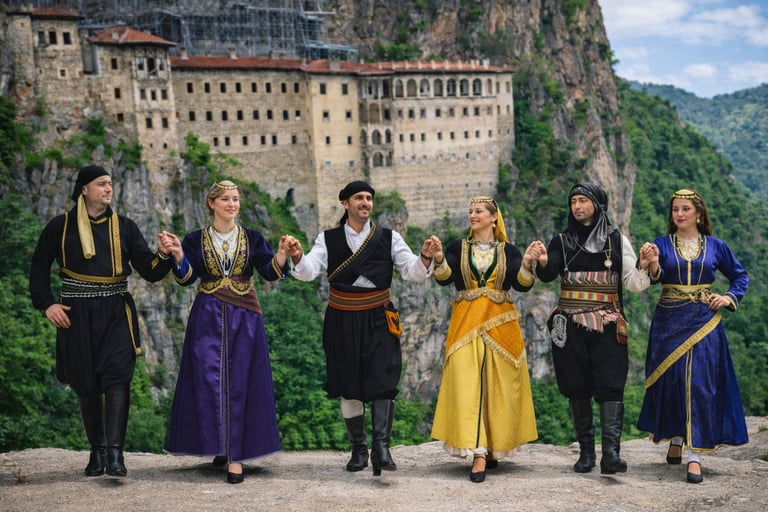
The Peloponnese is also known by the names Morea or Moria. It is mainly a mountainous region, as almost two-thirds of its area is covered by mountain ranges.
Pontus is the geographical zone of the northern coast of Asia Minor. It is bounded to the west by the Parthenios River in Bithynia, to the south by the Olgasis mountain range, to the east by Greater Armenia and to the north by the Black Sea.
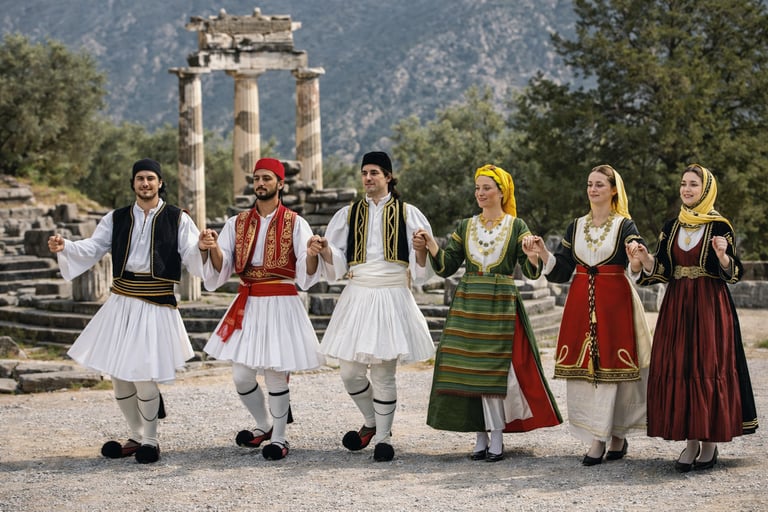
The region is located in the southern part of the purely continental body of Greece and is known as Central Greece or Roumeli, a name that has been used since the years of Frankish rule and means "land of the Romans", that is, of the Greeks.
During the dark years of the Ottoman Empire, Thessaly was a haven for thieves and bandits, while folk poetry glorified the region through some of the most beautiful folk songs.
The three parts of Thrace present different musical and dance trends, influenced by various timbres. In the area near Constantinople and on the coast of the Propontis, the music is influenced by the Byzantine.
Follow us
to always be informed.
subscribe
© 2025. All rights reserved.
Created by


Menu