
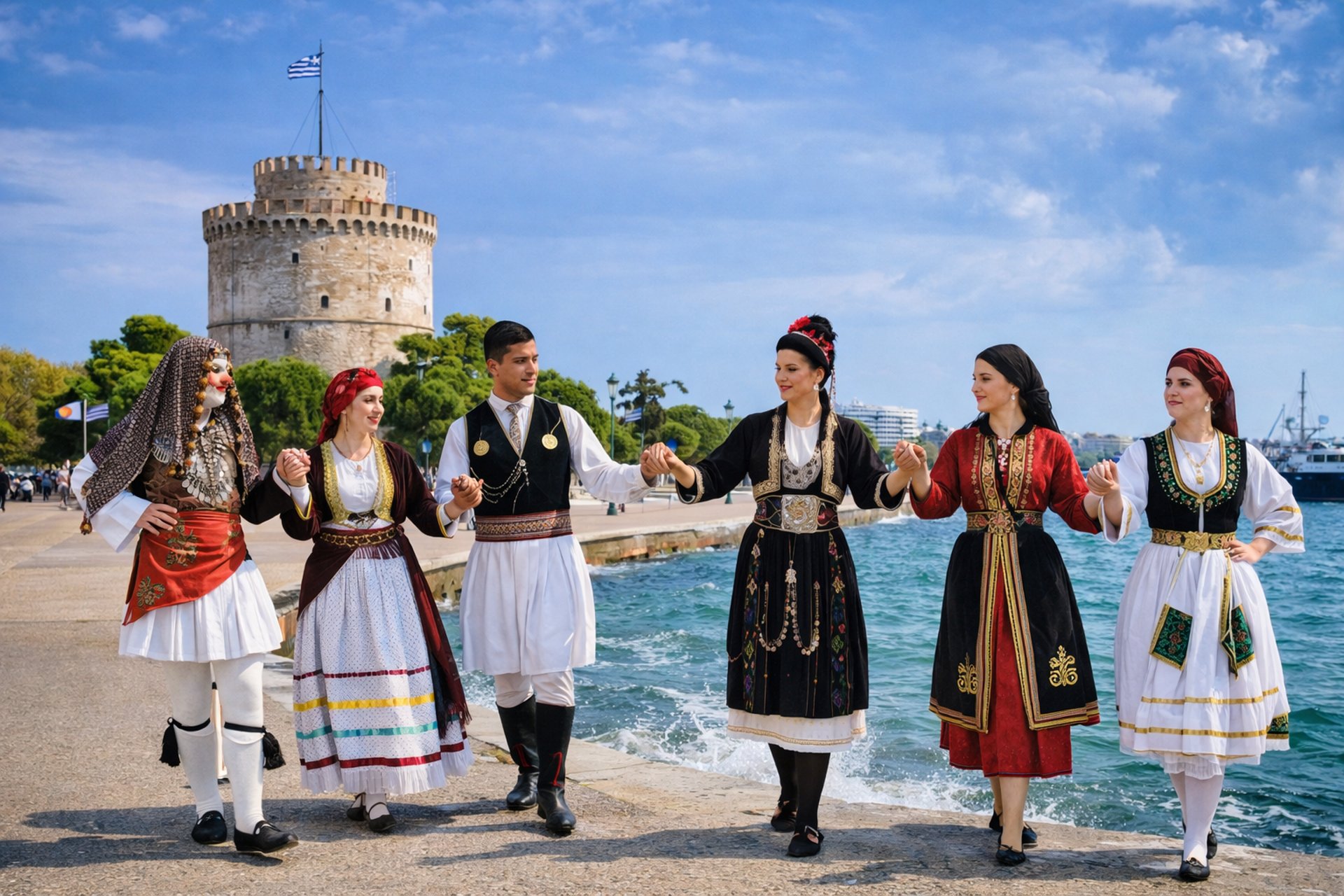
Macedonia
Location
In Western Macedonia, two main categories can be distinguished based on melodies, rhythms and dances. The first concerns the mountainous areas to the south and west of Mount Olympus, where the songs, dances and rhythms resemble the Thessaloniki style. The second concerns the lowland and urban areas of Pieria, Imathia and Florina, with a clearly local character. In the villages of Central Macedonia, in addition to the locals, there live refugees from Pontus, Eastern Rumelia, Macedonia, as well as Vlachs, who contribute in their own way to the dance tradition of the region.
Eastern Macedonia does not lag behind in musical and dance tradition compared to Western and Central Macedonia. The mountain ranges of Chalkidiki, Pangaeos and Kedryllia have been and continue to be a source of diverse motifs, which, despite inevitable changes, follow life and its evolution.
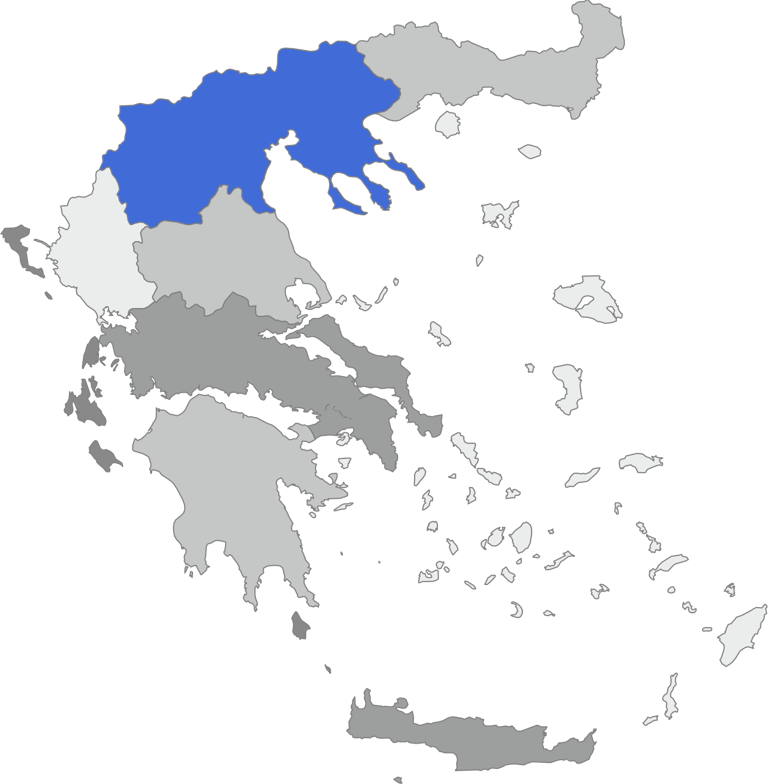
The large size of Macedonia results in different dance patterns and styles varying by region. However, especially in central and western Macedonia, a common feature is the intense movement, rhythm and “light” tread of the dancers.
In these regions, the lead dancer takes on the leadership of the group, creating various dance patterns that deviate from the strictly circular form. In his hand he holds a handkerchief, which he moves freely according to the rhythm or to send messages of participation to the other dancers.
In some dances, the lead dancer forms labyrinthine patterns (e.g. bagpipe, dusko, boem’tsa), which vary depending on the dance. It seems that these shapes incorporate elements of ancient mysteries, where the imitated learned about the safe passage from life to death, about the protection of the living from the dead and the dead from invisible spirits, as well as about fertility rites.
Info
Dances
Explore traditional Greek dances
Follow us
to always be informed.
subscribe
© 2025. All rights reserved.
Created by


Menu