
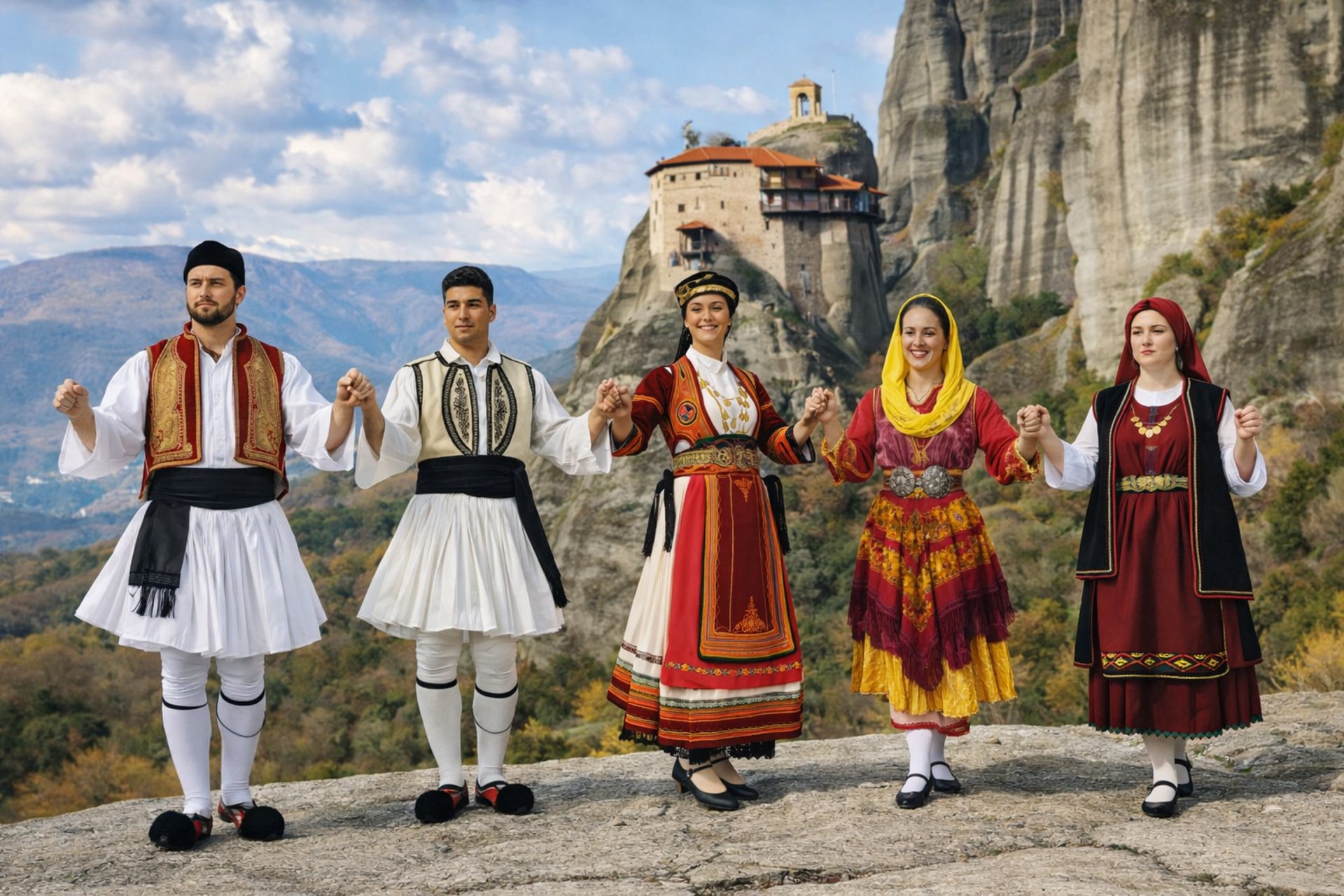
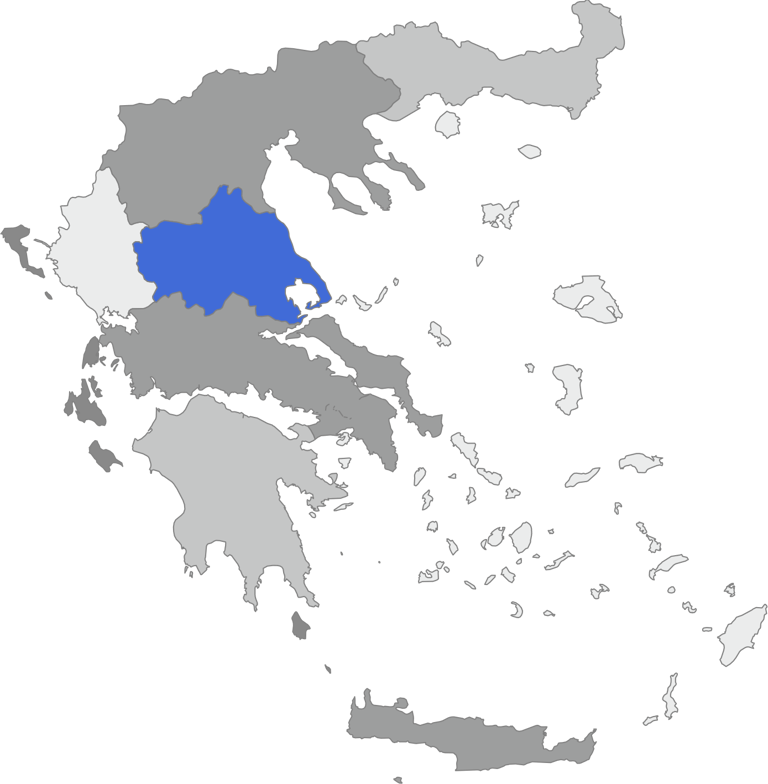
Thessalia
Location
During the dark years of the Ottoman Empire, Thessaly was a haven for thieves and bandits, while folk poetry glorified the region through some of the most beautiful folk songs. Opposite Olympus rises Ossa or Kissavos, in such a position that it gives the impression that the two mountains are ready to collide. Further south lies Pelion, rich in fruit trees and dense vegetation.
However, the most characteristic feature of Thessaly is its fertile plain. According to estimates, this extensive plain was formerly a large lake, which, due to continuous seismic phenomena, suffered subsidence, its waters were led to the Aegean Sea and eventually dried up.
Of particular importance are the local dances of Argithea, in southwestern Thessaly. The dances of the region are "closed", reminiscent of a slow tsamiko with heavy and imposing movements and show strong Epirus influences.
The dances of Pelion are clearly influenced by the rhythms of the Aegean, while the regions adjacent to Macedonia share rhythmic, musical and dance elements with it. Here too, the position of the dancers is strictly determined by social rules, while several dances are performed without the accompaniment of musical instruments.
Men and women usually entertained separately. Only on special occasions, such as weddings and large village festivals, were the festivities mixed. Women danced and sang both at festivals and in their daily lives, mainly in activities related to agriculture and the home, without ever using musical instruments. That is why most of the songs that have survived are women's. In contrast, men found more easily occasions for feasting, either in the coffeehouse or in homes, often with the accompaniment of instruments, when possible.
Info
Dances
Explore traditional Greek dances
Follow us
to always be informed.
subscribe
© 2025. All rights reserved.
Created by


Menu